

Working for a clean and prosperous California for all
The problem
Climate change is ravaging California by worsening wildfires, destroying livelihoods, and putting the state at risk for financial collapse. To mitigate further disaster, California is leading on climate action—including a 48% reduction in greenhouse gas emissions by 2030—but is currently off course. California’s boldness as a climate leader sparks inspiration and scrutiny. Unfortunately, existing narratives around affordability create the false perception that climate action and economic prosperity are competing priorities.
The solution
Economists have spent decades analyzing cost conscious strategies that affordably reduce emissions while growing a prosperous economy. At the core of California’s climate strategy is the cap-and-trade program, a policy that achieves climate targets at lowest economic cost. Economists design carbon prices, including cap-and-trade programs, to marshal the entire economy in a coordinated search for efficient and effective emissions reductions.
Our mission
Our mission is to secure a clean and prosperous California. We examine carbon pricing through an economic lens by synthesizing scientific evidence from the literature and using economic thinking to produce new research. Economic thinking facilitates smart designs for California’s cap-and-trade program so that climate action can be leveraged to solve a variety of statewide problems such as the affordability crisis, devastating wildfires, and budget deficits.

Our Work
We synthesize and produce nonpartisan research on the program’s performance and promising approaches to update the program.
Research
We bring key research findings into the public sphere in ways that are clear, accessible, and engaging.
Education
Convenings
We bring together the public and stakeholders to share ideas and learn from others.
What economists and experts say about carbon pricing
Cap-and-Trade: The Basics
California’s cap-and-trade program works by making polluters pay for their greenhouse gas emissions.
1
Cap-and-trade achieves reductions affordably at the lowest economic cost by marshaling the entire economy in a coordinated effort to find emissions reductions.
2
Cap-and-trade’s effectiveness has made it a model for other jurisdictions seeking to implement carbon pricing, including in China, Washington State, and Quebec.
3
Cap-and-trade plays a central role in California’s climate policy portfolio by reducing emissions and mitigating future climate impacts such as drought and wildfires.
4
Cap-and-trade collects funds from polluters that are used to lower utility bills and invest in community projects that promote sustainability and support the clean energy transition.
5
California Cap-and-Invest: A Political History
Cap-and-invest is an inherently American and bipartisan approach that addresses the climate crisis by harnessing the power of markets. Cap-and-invest was first developed by American economists in the 1970s and first employed in the United States by former President George H. W. Bush in 1990 to solve the problem of acid rain.
Cap-and-invest has been in California’s DNA since 2006, when Governor Schwarzenegger signed A.B. 32 and created a suite of climate policies with carbon pricing as a “key element” and its “integral piece”. Since then, other jurisdictions have design cap-and-invest programs using California’s as a model. Today, cap-and-invest is used by 12 other American states and implemented by a total of 36 jurisdictions worldwide, covering roughly 20% of global greenhouse gas emissions.
Governor Brown reauthorized the cap-and-invest program in 2017 with the passage of A.B. 398. In 2025, the Governor Newsom and the California legislature reauthorized the cap-and-invest program through 2045. The reauthorizations passed with a two-thirds support of the legislature and, in the case of the 2017 reauthorization, with republican votes.

Former Governors Jerry Brown and Arnold Schwarzenegger at the signing ceremony of the cap-and-invest extension bill, AB 398, on July 25, 2017.
Our name, “Clean and Prosperous California”, is inspired by former Governor Schwarzenegger’s congratulatory remarks to California leaders when they reauthorized the cap-and-trade program in 2017 via the passage of A.B. 398 and S.B. 32: “Governor Brown and legislative leaders from both parties came together to ensure that California continues to march toward a clean, prosperous future”.
Leadership
We are a team of economists and lawyers based in California and committed to securing and clean and prosperous California for all. Our Board serves voluntarily without compensation.

-
BOARD MEMBER
Joe served as a California State Assemblymember from 2000-2006 and was principal coauthor of AB 32, the statute that authorized cap-and-trade. He is now on the Independent Emissions Market Advisory Committee (IEMAC), which evaluates the cap-and-trade program.
Joe has been a Stanford Professor of the Practice in Public Policy and Human Biology, co-directing the graduate student Practicum and teaching policy courses on climate change, health care, and California issues. He is a member of the Economic Advisory Board, Bay Area Council, and Climate Cabinet Action. As a longtime RAND consultant, he directs State Statistics, a socioeconomic database launched in 1997.
Joe holds a Ph.D. in Public Policy Analysis from Pardee RAND Graduate School, an M.Sc. in Diplomacy and Security from Georgetown University, and a B.A. in Economics, German, and French from the University of Colorado, Boulder. Joe resides in Lake Tahoe, CA.

-
BOARD MEMBER
Kyle Meng is the Director of emLab's Climate & Energy Program, an Associate Professor at the Bren School and the Department of Economics at the University of California, Santa Barbara, and a Faculty Research Fellow at the National Bureau of Economic Research (NBER). An environmental and resource economist with training in engineering and atmospheric physics, Kyle studies the effectiveness and equity consequences of environmental policies, with a focus on climate policies. He has published in leading economics and science journals, including the American Economic Review, Journal of Political Economy, Nature, Science, and PNAS. His research has been covered, among other media outlets, by the New York Times, the Washington Post, and the Wall Street Journal, and he has appeared before the U.S. Congress.
Kyle received his Ph.D. in Sustainable Development from Columbia University and his Bachelor’s in Civil and Environmental Engineering from Princeton University. A first-generation immigrant, Kyle was a recipient of the Paul and Daisy Soros Fellowship for New Americans.
-
BOARD MEMBER
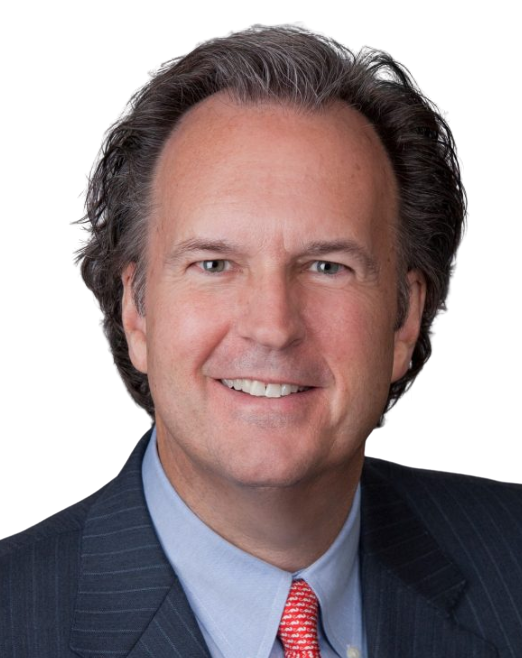
Bob Wyman is the co-founder and Board Chair of Earthshot, a climate education nonprofit that showcases exciting clean technologies through entertaining media. Bob is the lead writer of the EV-oriented comic series, Supercharged!
For 40 years Bob worked in the Los Angeles and Washington, D.C. offices of Latham & Watkins, where he served as the Global Chair of the firm’s Environment, Land & Resources Department.
During his legal career, Mr. Wyman worked on key provisions of the federal 1990 Clean Air Act Amendments and designed several innovative and market-based air quality programs, including the South Coast Regional Clean Air Incentives Market (RECLAIM), the air quality investment program and the clean air communities program. He also contributed several risk-based air quality protective provisions to regional and state air quality programs.
Bob was the longest-serving (30-year) member of the EPA Clean Air Act Advisory Committee. He regularly received the highest California and US professional rankings in environmental, energy and climate change practice areas and was recognized as one of three National Energy and Environment Most Influential Lawyers of the Decade by the National Law Journal in 2010. He was elected to the first class of the American College of Environmental Lawyers (ACOEL) for which he briefly served as Secretary and Director.
Bob has served on several other nonprofit Boards, including the LA Area Chamber of Commerce, the Pasadena Conservatory of Music, the Asthma and Allergy Association of America, CALSTART and Tennis America.
Bob received his A.B. from Princeton and his J.D. from the University of Virginia School of Law. He clerked for US District Court Judge Robert J. Kelleher from 1980-81.

-
EXECUTIVE DIRECTOR
Clayton is a widely published climate economist with over four dozen scholarly articles and policy papers on carbon pricing. Clayton has also led research and advised on the design of carbon taxes, cap-and-trade programs, and other carbon pricing policies on six continents.
Clayton has held multiple expert and advisory roles including as Board Member at Earthshot, member of Colorado’s GEMM Trading Technical Working Group, and Expert to the International Initiative for Development of Article 6 Methodology Tools.
Clayton holds an A.S. from Monroe Community College, B.S. from Cornell University (with Distinction), M.S. from UC Berkeley, and is completing his Ph.D. at UC Berkeley. He is a first-generation college student and a Jack Kent Cooke Foundation scholar through their low-income high-ability “Pathways to Success” program. Clayton is based in Berkeley, CA.
Sign up for our listserv to stay up to date on our publications, news, resources, and events.